
Introduction
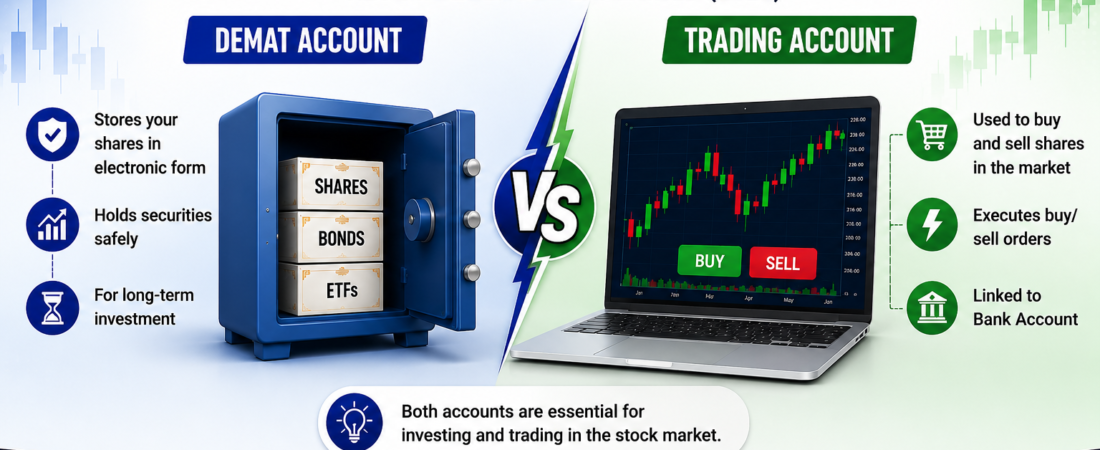
If you are new to the stock market, you may be confused about the difference between a Demat account vs Trading account. Many beginners think both accounts are the same, but they serve different purposes.
In this guide, you’ll learn the key differences between a Demat account and a Trading account, how they work together, their charges, and which one you need before investing in the Indian stock market.
Choosing between a Demat Account vs Trading Account is one of the biggest questions for beginners entering the stock market. This guide explains the difference between a Demat Account vs Trading Account in simple language.
What is a Demat Account?
A Demat Account (Dematerialized Account) is used to store shares and other securities in electronic form. It works like a digital locker for your investments and is maintained by depositories such as NSDL and CDSL through SEBI-registered brokers.
If you don’t have one yet, read our step-by-step guide on How to Open a Demat Account Online.
What is a Trading Account?
A Trading Account is used to buy and sell shares on stock exchanges such as NSE and BSE. When you place a buy or sell order through your broker, the Trading Account executes the transaction. It is linked to your Demat Account and bank account to complete the investment process.
Demat Account vs Trading Account
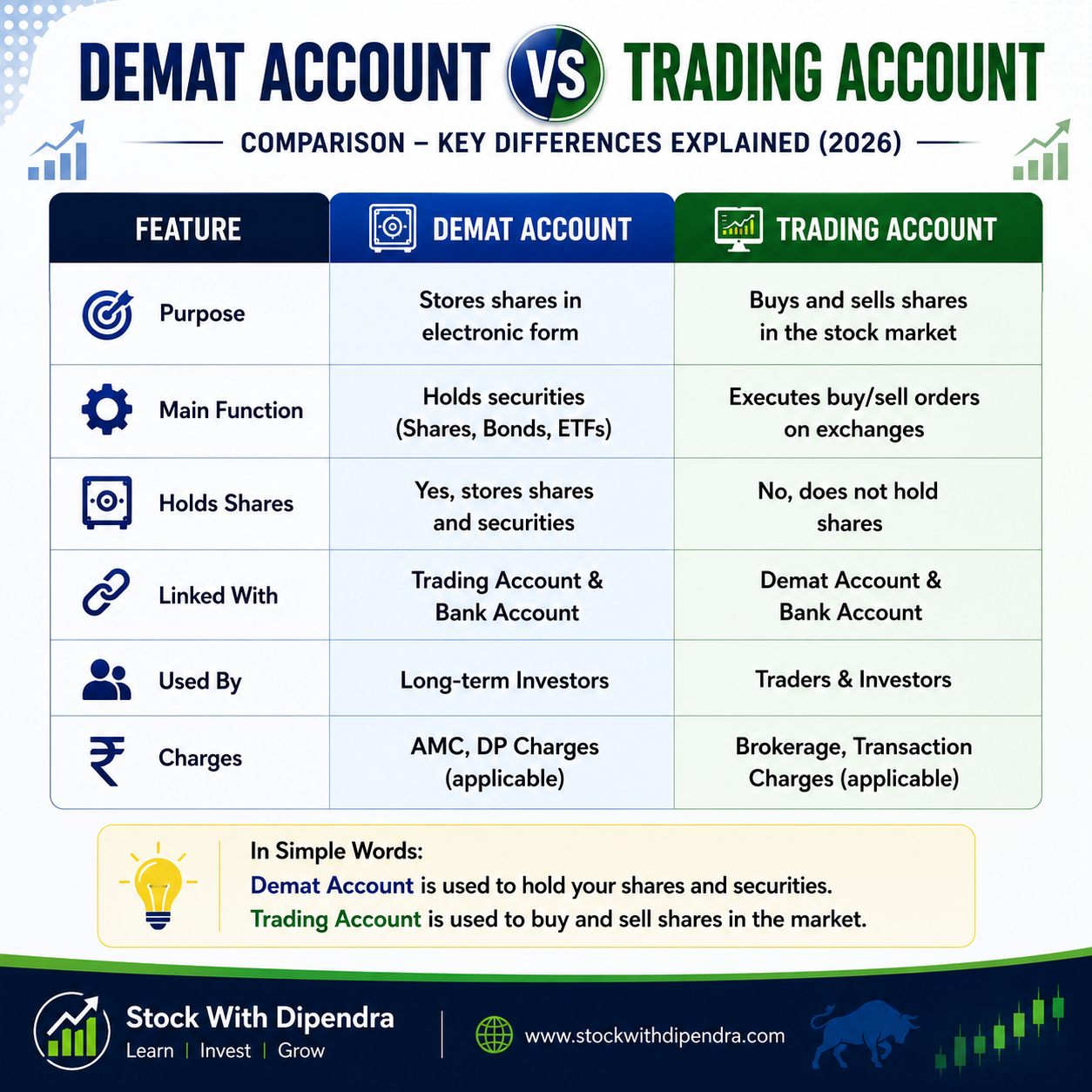
| Feature | Demat Account | Trading Account |
|---|---|---|
| Purpose | Stores shares electronically | Buys and sells shares |
| Holds Shares | ✅ Yes | ❌ No |
| Required For | Holding investments | Executing trades |
| Linked With | Trading Account & Bank | Demat Account & Bank |
| Used By | Investors | Traders & Investors |
In simple words, a Demat Account stores your shares, while a Trading Account helps you buy and sell those shares.
Do You Need Both Accounts?
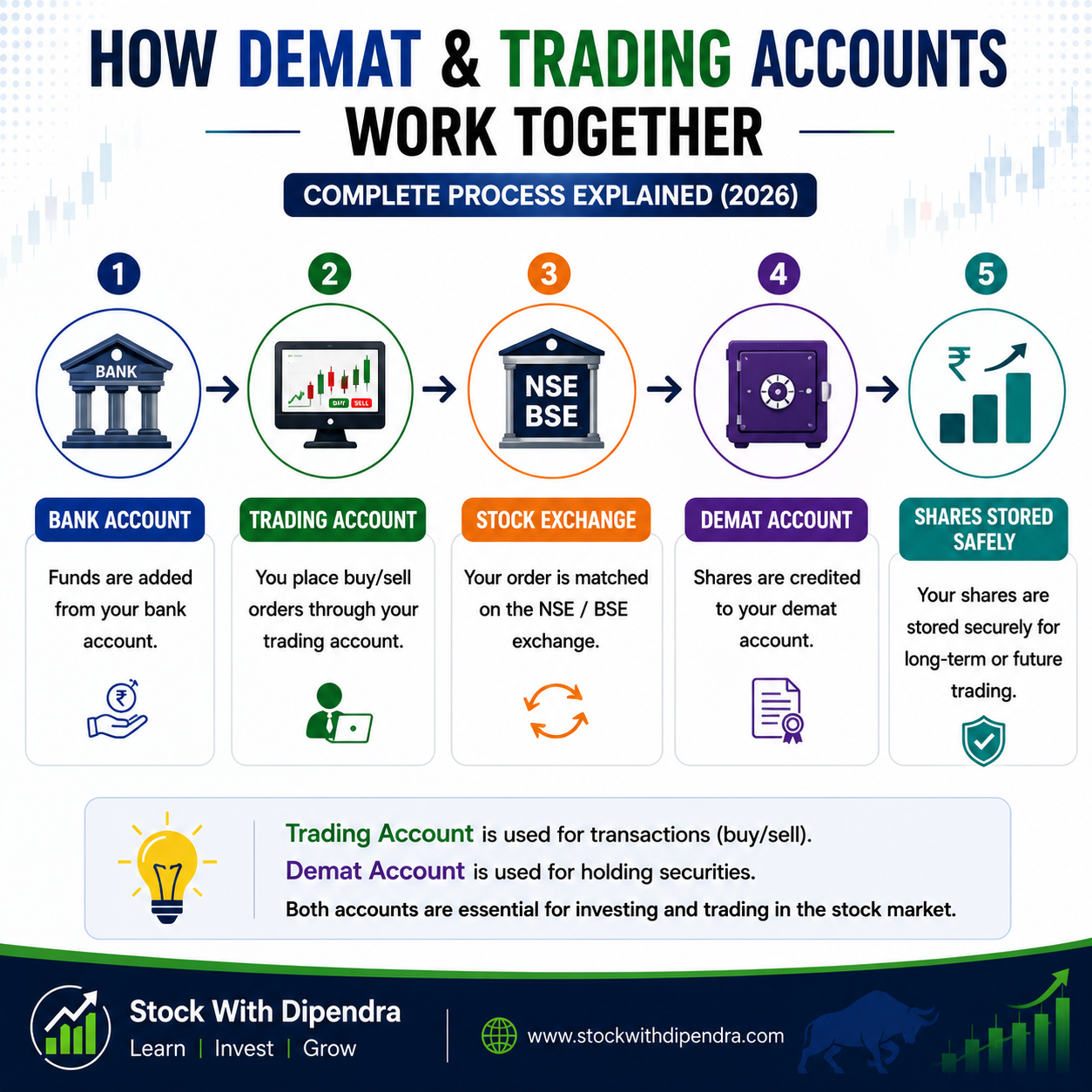
Yes, in most cases, you need both a Demat Account and a Trading Account to invest in shares. The Trading Account is used to buy and sell shares, while the Demat Account safely stores your purchased shares in electronic form. Both accounts work together to complete stock market transactions.
Can You Open a Demat Account Without a Trading Account?
Yes, you can open a Demat Account without a Trading Account. However, if you want to buy or sell shares on the stock exchange, you will eventually need a Trading Account. A Demat Account alone is mainly used for holding securities.
Can You Open a Trading Account Without a Demat Account?
In most cases, a Trading Account is linked with a Demat Account for equity delivery trading. However, for certain trading segments such as intraday trading, the requirements may vary depending on the broker and the type of transaction.
Charges for Demat and Trading Accounts
| Charges | Demat Account | Trading Account |
|---|---|---|
| Account Opening Fee | May be Free | Usually Free |
| Annual Maintenance Charge (AMC) | Applicable with many brokers | Usually Not Applicable |
| Brokerage Charges | No | Yes (on trades) |
| Other Charges | DP Charges | Transaction Charges |
Note: Charges vary by broker. Always check the latest pricing on the broker’s official website before opening an account.
Which One is Better for Beginners?
Neither account is better than the other because both serve different purposes. If you want to invest in the stock market, you generally need both accounts. If you’re still confused about choosing a broker, read our detailed guide on Best Demat Account in India to compare brokerage, AMC charges, and features before opening your account.
Common Mistakes Beginners Make
- Choosing a broker based only on free account opening offers.
- Ignoring Annual Maintenance Charges (AMC).
- Not checking brokerage charges before trading.
- Opening an account without comparing different brokers.
- Ignoring customer support and mobile app quality.
Frequently Asked Questions (FAQs)
Q1. Are Demat Account and Trading Account the same?
No. A Demat Account stores shares, while a Trading Account is used to buy and sell shares.
Q2. Do I need both accounts?
Yes, for most equity investments, you generally need both accounts.
Q3. Can I invest in IPOs without a Demat Account?
No. A Demat Account is required to receive IPO shares after allotment.No. A Demat Account is required to receive IPO shares after allotment. If you’re new to IPO investing, read our complete guide on What is IPO? Complete Beginner’s Guide.
Q4. Which account should I open first?
Most brokers open both accounts together during the online account opening process.
Conclusion
Understanding the difference between a Demat Account and a Trading Account is essential before you start investing. A Demat Account stores your investments, while a Trading Account helps you buy and sell them. Choosing the right broker and understanding both accounts will make your investment journey easier and more efficient.
We hope this Demat Account vs Trading Account guide helped you understand how both accounts work together before you start investing.